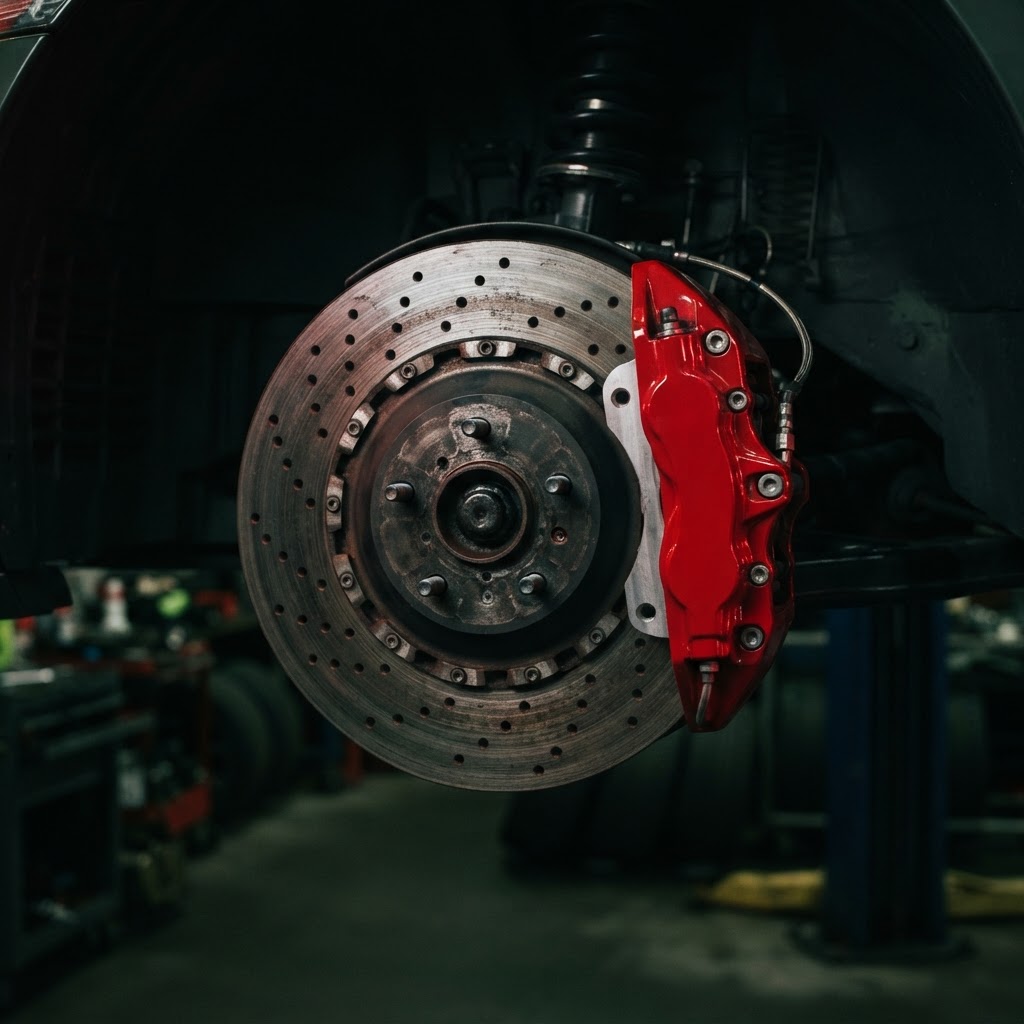
Pads or rotors?
Here is exactly how we decide
Most shops answer that question with a guess, or with the most expensive option. We measure the pad material and the rotor thickness against the manufacturer’s specification, show you the numbers, and replace only what is actually worn out.
Ready to get your brakes checked?
Online in under a minute · Same-week appointments · Written estimate before any work
When pads are enough — and when they are not
Pads wear; rotors wear too. Pads are the sacrificial friction material, so they usually need replacing first. Rotors wear thinner, take on grooves and pad deposits, and rust. The only honest way to know which you need is to measure both and compare them to spec — which is the first thing we do.
Pads only
When the rotors can stay
- —Rotor is above its stamped minimum thickness with real margin left
- —Rotor face is smooth and flat, without deep scoring or ridges
- —No pulsation through the pedal or steering wheel
- —No heat cracks, blue spots, or heavy rust scale
- —Rotor has been measured for thickness and runout, not eyeballed
- —Wear is even across the face and both sides of the rotor
Pads and rotors
When the rotors have to go
- —Rotor measured at or below the minimum thickness stamped on the hat
- —Deep grooves, a raised lip at the outer edge, or a scored face
- —Pedal pulsation, steering shake, or a shudder when braking from highway speed
- —Heat cracks, blue hot spots, or heavy rust flaking across the surface
- —Pads worn to metal and the backing plate has scored the rotor
- —A seized caliper or collapsed hose has cooked one side
- —Rotors already machined once — there is no material left to remove
- —Rotor has more than about half its service life used up when new pads go on
One rule we do not bend: we never install new pads on a rotor that fails a thickness or runout measurement. That is a job that comes back — noisy, pulsing, or stopping short of what you paid for.
Why rotors matter, not just pads
Pads are what everyone talks about because they are the part that wears out. But the rotor is the other half of the brake — the friction ring the pad clamps, and the heat sink that keeps the whole system from cooking itself. Replacing pads on a worn rotor fixes the symptom and leaves the cause in place.
The rotor is half of your friction surface
Pads stop the car against the rotor, not against thin air. A worn rotor is not flat — it carries grooves, taper, and pad deposits from the last set. New pads only touch the high spots, so you lose contact area, get uneven wear, and never get the braking you paid for.
A thinner rotor is a smaller heat sink
Rotors absorb and shed the heat of every stop. Material removed by wear or by machining means less mass to absorb that heat, so temperatures climb faster and fade arrives sooner — on a downhill, with a loaded vehicle, or in a panic stop.
Minimum thickness is a safety limit, not a suggestion
The minimum thickness stamped on the rotor hat is where the disc can no longer shed heat safely and can crack or warp under load. Pads do not restore that margin.
New pads cannot fix pulsation
Pedal pulsation almost always comes from disc thickness variation or uneven pad deposits on the rotor. Replacing pads only leaves the vibration exactly where it was, and it will usually come back worse on the new set.
Old friction material is embedded in the surface
A used rotor holds a layer of the previous pad compound. New pads need a clean, true surface to bed in properly. Skipping the rotor is the most common reason new brakes come back noisy, grabby, or short-lived.
In New England, rotors rust from the inside out
Salt and road brine pit the rotor face and scale the cooling vanes. A rust lip along the edge chews at the new pad, and internal scale traps heat. What looks fine through the wheel is often not fine at the friction ring.
What we will never do: machine a rotor below its stamped minimum, skip measuring a rotor because “it looks fine through the wheel,” or sell you rotors you do not need. If your rotors pass, we tell you that and save you the money.
How a brake diagnosis works here
Six steps, in the same order, every time. You see the measurements and the photos before anything is ordered or installed.
- 01
We ask, then we drive it
Before anything comes apart: what does it sound like, when does it happen, is the pedal or the wheel shaking, and has anything changed recently. Then a road test at low and highway speed so we can feel what you feel.
- 02
Wheels off, all four corners
Pad thickness measured inner and outer on every corner — inner pads wear faster and are invisible from outside. We look at rotor faces, caliper pistons, slide pins, boots, hoses, lines, and wheel bearing play.
- 03
Measured, not eyeballed
A digital micrometer reads rotor thickness at several points around each disc and compares it to the minimum stamped on the rotor. A dial indicator checks lateral runout, which is what tells us whether a rotor can stay or has to go.
- 04
Hydraulics and electronics
Brake fluid is tested for moisture and copper content, the reservoir and master cylinder are checked, and we scan for ABS and wheel-speed sensor codes. A brake fault is not always a pad problem.
- 05
Written findings with photos
You get the actual numbers — pad millimeters and rotor thickness against spec — plus photos and a split of what is urgent, what is fine, and what can wait until next visit. Nothing gets replaced without your approval.
- 06
The repair, then a second road test
Pads and rotors as needed, hardware replaced, slides cleaned and lubricated, everything torqued to spec, fluid flushed if it is due, then a bed-in procedure and a second road test before the car goes back to you.
Organic, semi-metallic, metallic, ceramic — what is the difference?
The friction compound decides how the pedal feels, how much dust lands on your wheels, how loud the brakes are, how the rotors wear, and how the car behaves when the brakes get hot. All four are real categories with real trade-offs — the right choice depends on the vehicle and how it is driven.
Quiet, gentle
Organic
Non-asbestos organic (NAO) friction material — a mix of rubber, resins, and fibers. Soft, quiet, and easy on rotors, but it gives up heat resistance and life.
- Made of
- Rubber, resins, carbon, aramid and glass fibers
- Cold bite
- Good from the first stop
- Heat / fade
- Fades soonest — not for repeated hard stops
- Dust
- Heavier, darker dust
- Noise
- Quietest of the four
- Rotor wear
- Lightest
- Service life
- Shortest
- Best for
- Light, low-speed driving in older or light vehicles
The workhorse
Semi-metallic
A blend of organic material and 30–65% metal (steel wool, copper, iron powder). Strong bite and good heat handling — the default on many trucks, SUVs, and police vehicles.
- Made of
- Organic compound plus steel wool, copper, and iron
- Cold bite
- Strong
- Heat / fade
- Good — handles towing and repeated stops
- Dust
- More dust, and it can be rusty brown on wheels
- Noise
- More prone to squeal than ceramic
- Rotor wear
- Moderate to heavy
- Service life
- Long
- Best for
- Trucks, SUVs, towing, and vehicles that work hard
Maximum heat
Metallic
Full metallic friction material with a high metal content. Built for extreme heat and heavy duty — it stops hard and hot, and asks for a lot in return.
- Made of
- High metal content, little organic filler
- Cold bite
- Weakest when cold
- Heat / fade
- Highest heat resistance of the four
- Dust
- Heavy metallic dust that sticks to wheels
- Noise
- Noisiest — expected groan and squeal
- Rotor wear
- Heaviest
- Service life
- Long under hard use
- Best for
- Heavy duty, racing, and severe load applications
Clean and quiet
Ceramic
Ceramic fibers and fillers with copper-free friction modifiers. Low dust, low noise, stable at temperature, and the closest match to most modern factory pads.
- Made of
- Ceramic fibers and fillers, often copper-free
- Cold bite
- Smooth — slightly softer than semi-metallic
- Heat / fade
- Very stable for normal and spirited driving
- Dust
- Lightest, and it does not stick to wheels
- Noise
- Very quiet
- Rotor wear
- Light to moderate
- Service life
- Long
- Best for
- Daily drivers, cars, and light SUVs — what we fit most often
What we fit, and why
For most cars and light SUVs we fit ceramic — quiet, low dust, and easy on rotors, matching what the factory put there. For trucks, towing, and heavy SUVs we fit semi-metallic, which handles heat better. Full metallic is reserved for severe duty. Organic is rarely the right answer on a modern vehicle, and we will say so if it is what you were sold somewhere else.
The brands on our brake shelf
We stock and order five families of brake parts, and we match the compound and quality level to the vehicle rather than pushing one brand at everyone. If your vehicle calls for something we do not stock, we order it by VIN.
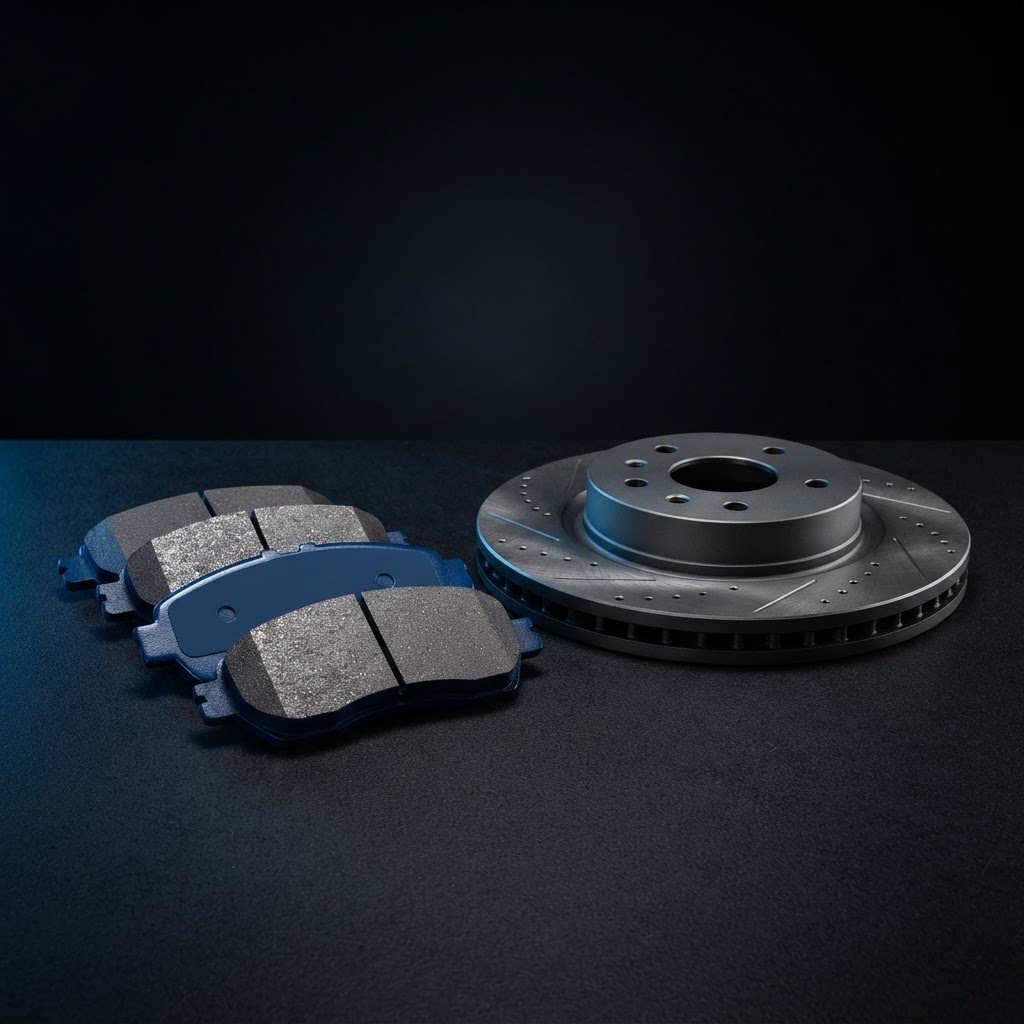
Semi-metallic pads
Bosch Blue
Bosch’s value semi-metallic line. Strong cold bite and good heat handling at a sensible price — a solid fit for daily-driven trucks, SUVs, and cars that see real traffic.
Best for: Daily drivers, SUVs, light towing
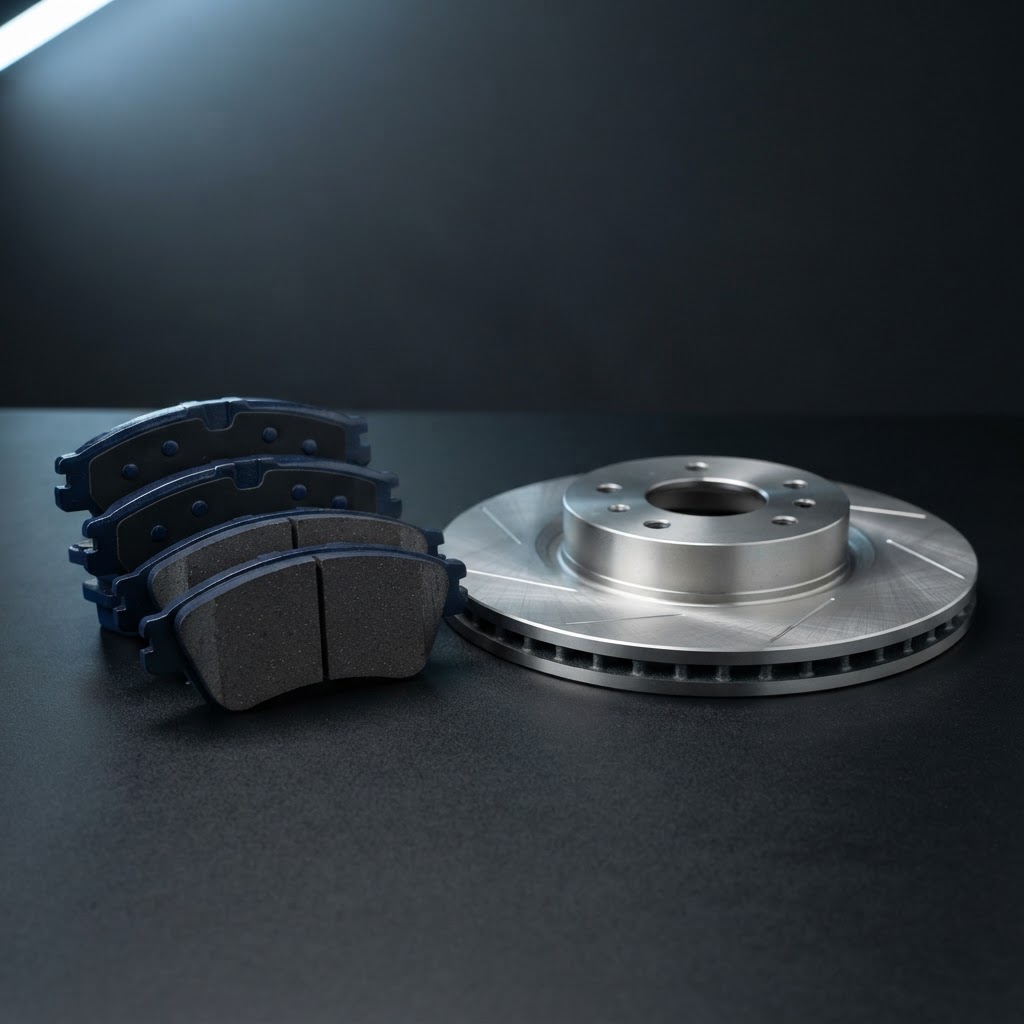
Ceramic pads
Akebono
Akebono supplies ceramic friction to manufacturers as original equipment, and their aftermarket ceramic pads are quiet, low-dust, and rotor-friendly. Our usual choice for cars and light SUVs.
Best for: Cars and light SUVs, low-dust preference
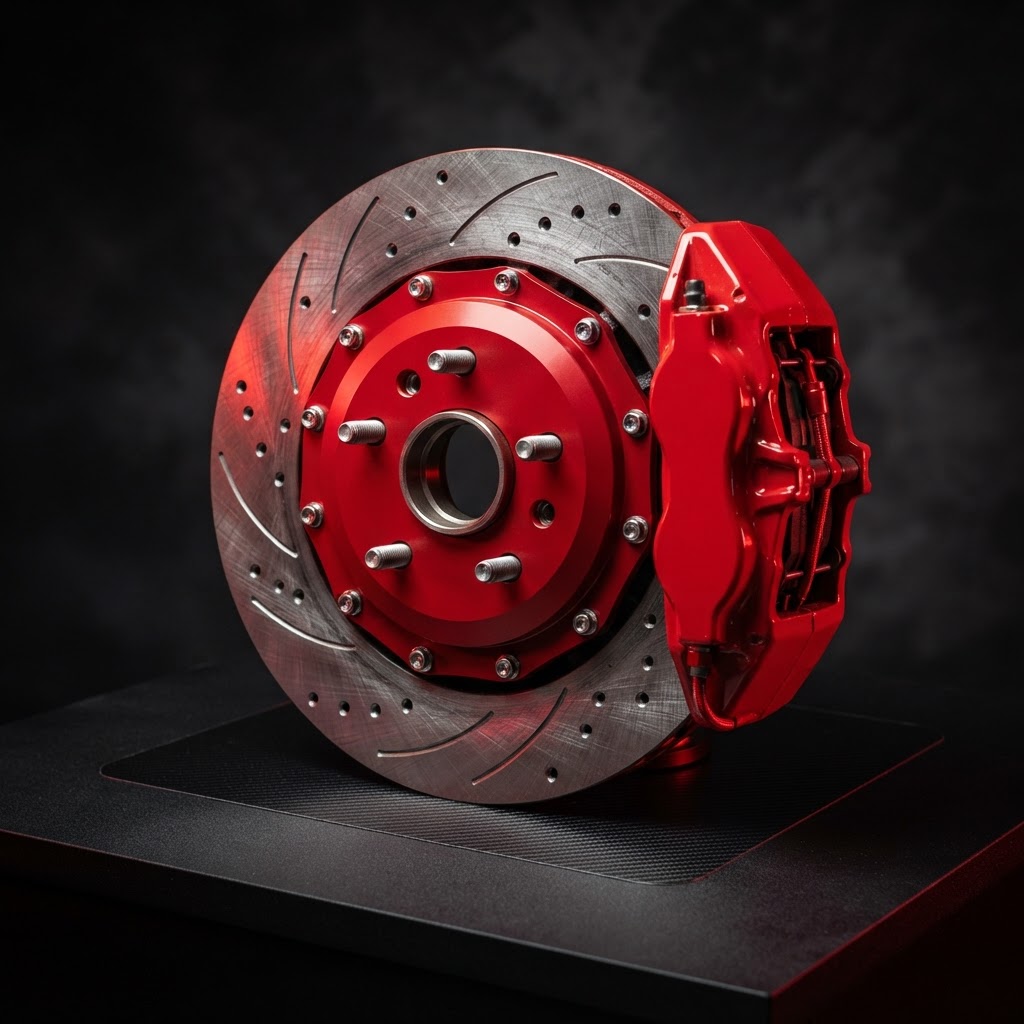
Performance pads and rotors
PowerStop
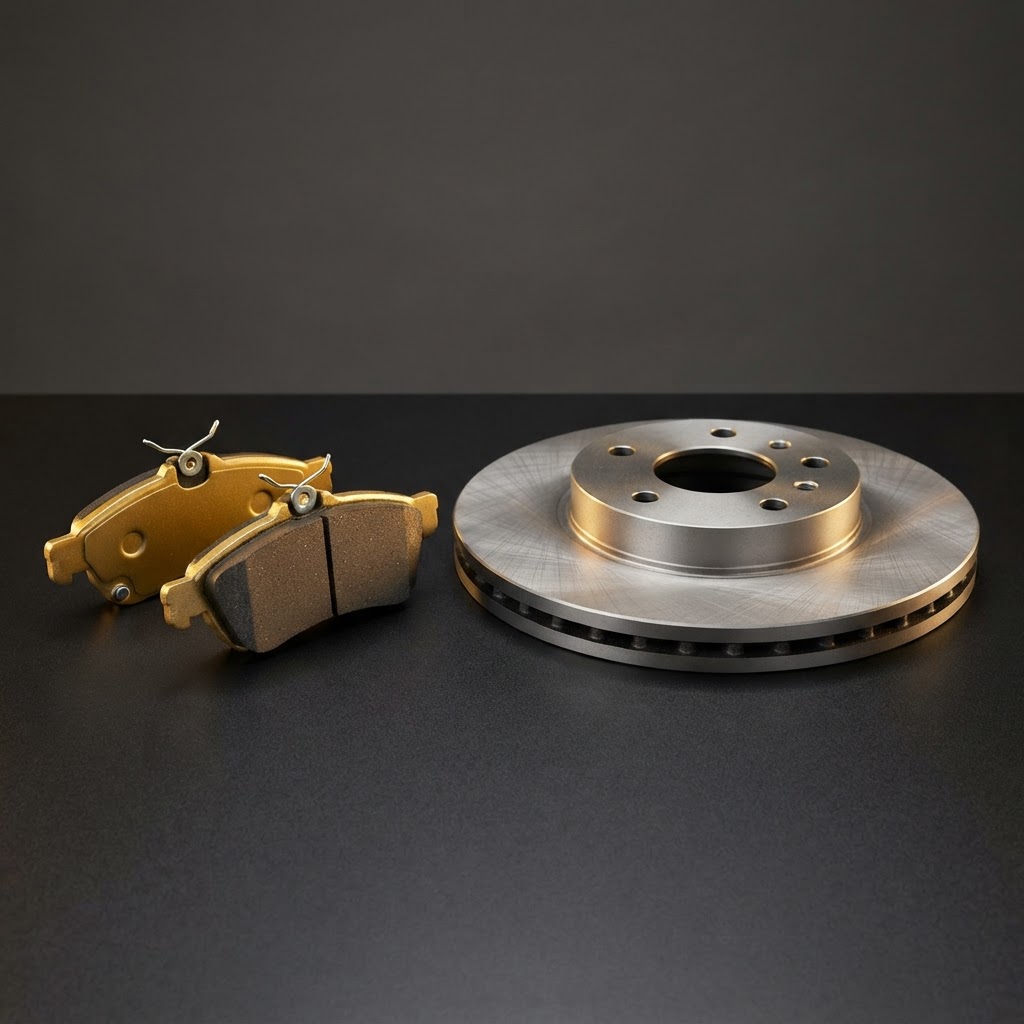
Carbon-fiber ceramic compounds, drilled and slotted rotors, and a truck-and-tow line built for heat. For drivers who want more bite, better looks behind the wheel, or capacity for a loaded trailer.
Best for: Performance, lifted trucks, towing
OEM-grade replacement
ACDelco
General Motors’ parts brand, with Gold and Professional lines that match factory fit and friction. The natural pick for GM vehicles and a reliable match for many others.
Best for: GM vehicles, factory-matched feel
Straight from the manufacturer
OEM Factory Parts
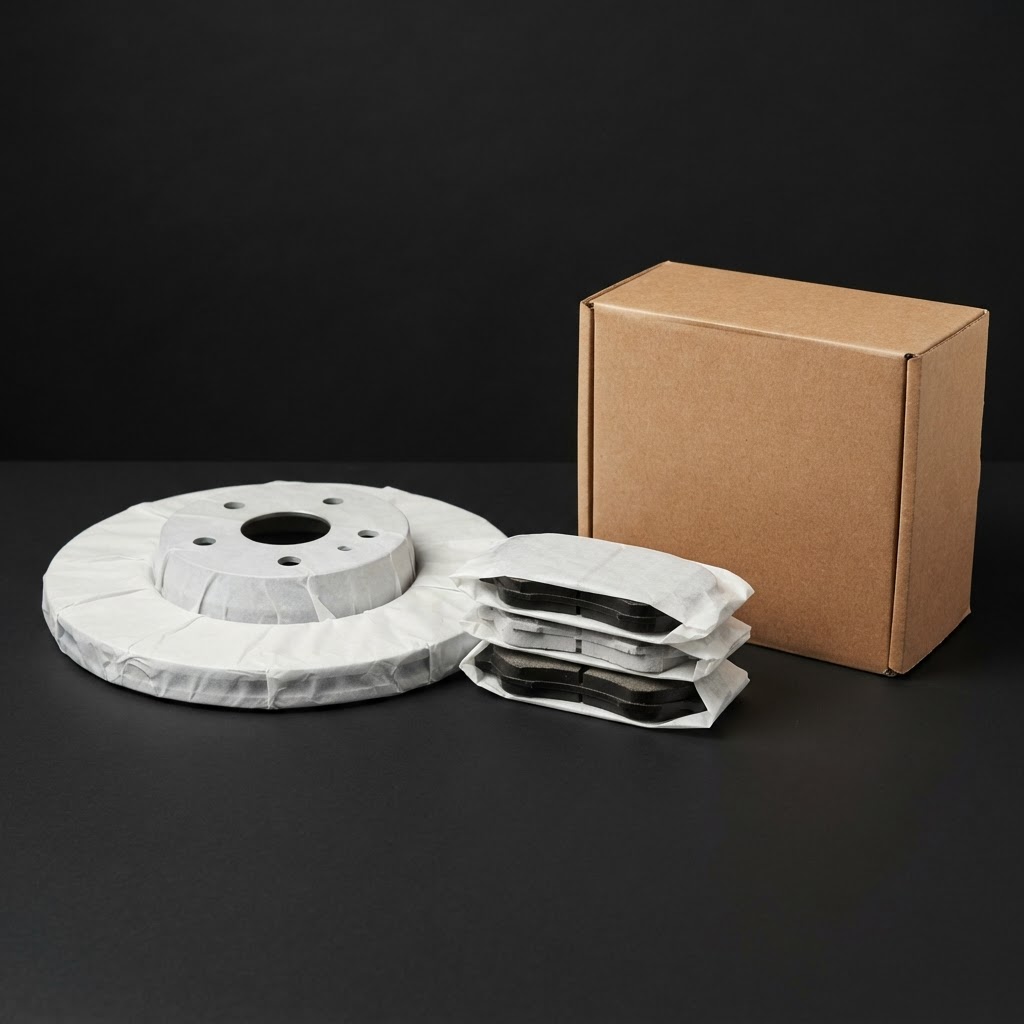
Genuine factory pads and rotors ordered by VIN. The exact compound, shims, and hardware the vehicle was built with — the right answer for warranty-sensitive or hard-to-match applications.
Best for: Factory match, newer and specialty vehicles
Product images are representative of each line, not the exact part number for your vehicle. Ask us for the specific pads and rotors quoted on your repair order before the work begins.
Brake questions we answer every week
Do I always need rotors when I replace pads?+
No — but only when the rotor has been measured and passes. It has to be above the minimum thickness stamped on the rotor hat, flat and free of deep scoring, and not causing pulsation. If any of that fails, pads alone will not restore proper braking, and the new pads will wear unevenly. We show you the measurement, so you are never guessing.
My brakes squeal but stop fine — is that urgent?+
A high-pitched squeal is usually the wear indicator tab touching the rotor, which means the pads are near the end. If the noise is a grind or a metal-on-metal scrape, stop driving and call us — that is the backing plate cutting into the rotor. A squeal right after new brakes are installed usually means they still need bedding in.
Why does my pedal pulse or the steering wheel shake when I brake?+
That is disc thickness variation — the rotor is no longer the same thickness all the way around, often from uneven pad deposits or heat. It is rarely fixed by pads alone. We measure runout and thickness, and replace the rotors when they are out of spec.
Can you resurface (machine) my rotors instead of replacing them?+
Only when there is enough material left to stay above minimum thickness afterwards, which is uncommon on modern vehicles — many rotors are close to minimum when new. Resurfacing also removes mass and heat capacity. Once you add the machining cost to the labor, replacement is usually the better value and the safer result. We will tell you which applies to your vehicle.
How long should brakes last?+
Typically 30,000 to 70,000 miles for pads, and often two pad sets per rotor — but city driving, towing, and a heavy vehicle can cut that in half. Rear pads on vehicles with rear brake bias or automatic hold can wear faster than expected. Inspection intervals matter more than averages.
Do you replace brakes on both sides at once?+
Yes, pads and rotors are replaced per axle. Mixing a new set with a worn set pulls the vehicle to one side under braking and can trigger ABS or stability-control faults.
How long does a brake job take?+
A front or rear pad and rotor job is typically two to four hours. Seized hardware, rust-belt calipers, and parking-brake assemblies can add time. A brake fluid flush adds about an hour and can usually be done in the same visit.
How often should brake fluid be changed?+
Every three years or about 30,000 miles for most vehicles, sooner for heavy use. Brake fluid absorbs moisture from the air, which lowers its boiling point and rusts the system from the inside. We test moisture and copper content rather than selling a flush on mileage alone.
Ceramic or semi-metallic for my vehicle?+
Ceramic is the better fit for most cars and light SUVs: quieter, far less dust, and gentle on rotors. Semi-metallic handles heat better, so it is the right call for towing, hauling, heavy SUVs, and hard mountain driving. We match the compound to how the vehicle is actually used.
Are more expensive pads worth it?+
They usually are for noise, dust, and life — cheap pads are the most common cause of comeback squeal and heavy dust. What we do not do is sell a performance pad to a car that just commutes. The right compound for your driving beats the most expensive one on the shelf.
A brake warning light came on. What does it mean?+
It can be low fluid from a leak or worn pads, a pad-wear sensor, the parking brake, or an ABS fault. It is worth checking promptly — low fluid is a hydraulic problem, not just a pad problem. We scan the ABS module as part of every brake inspection.
Why do my brakes feel weak in the winter or after rain?+
A film of rust forms on iron rotors overnight or in wet weather, and the first few stops clear it. If the weakness lasts beyond a stop or two, or the pedal feels soft or long, that is hydraulic — have it looked at rather than waiting.
Book your brake inspection
Grinding, squealing, a soft pedal, or just a vibration you do not like — we will measure it and tell you straight.