What does that
dashboard light mean?
Every symbol on your dash, explained in plain English. Start with the color: it tells you how urgently you need to act. Point at any symbol below to see its name, then select it for an instant explanation of what it generally means, what to do next, and how our technicians check it.
What a dashboard light's color means
There are generally three grades of dash indicator, separated by color: green or blue, yellow or orange, and red. The color — not the shape — is your first clue about how urgent it is.
Green or Blue
Active or normal
Green and blue confirm a system is switched on or operating as designed — headlights, turn signals, cruise control, or an EV sitting in Ready mode.
Nothing to repair. Blue specifically means your high beams are on, which can dazzle oncoming drivers at night.
Yellow or Orange
Caution — service soon
Amber means a system is degraded or a service is coming due. The vehicle is usually still safe to drive, but it should not be ignored for long.
Drive normally and book a diagnostic soon. A blinking amber light, or one paired with poor running, means stop sooner rather than later.
Red
Stop safely
Red flags a condition that can damage the engine, brakes, or charging system — or put you at risk if you keep driving.
Unless your owner's manual says otherwise, slow down, pull over somewhere safe, and call the shop. Never keep driving on an oil-pressure or brake warning.
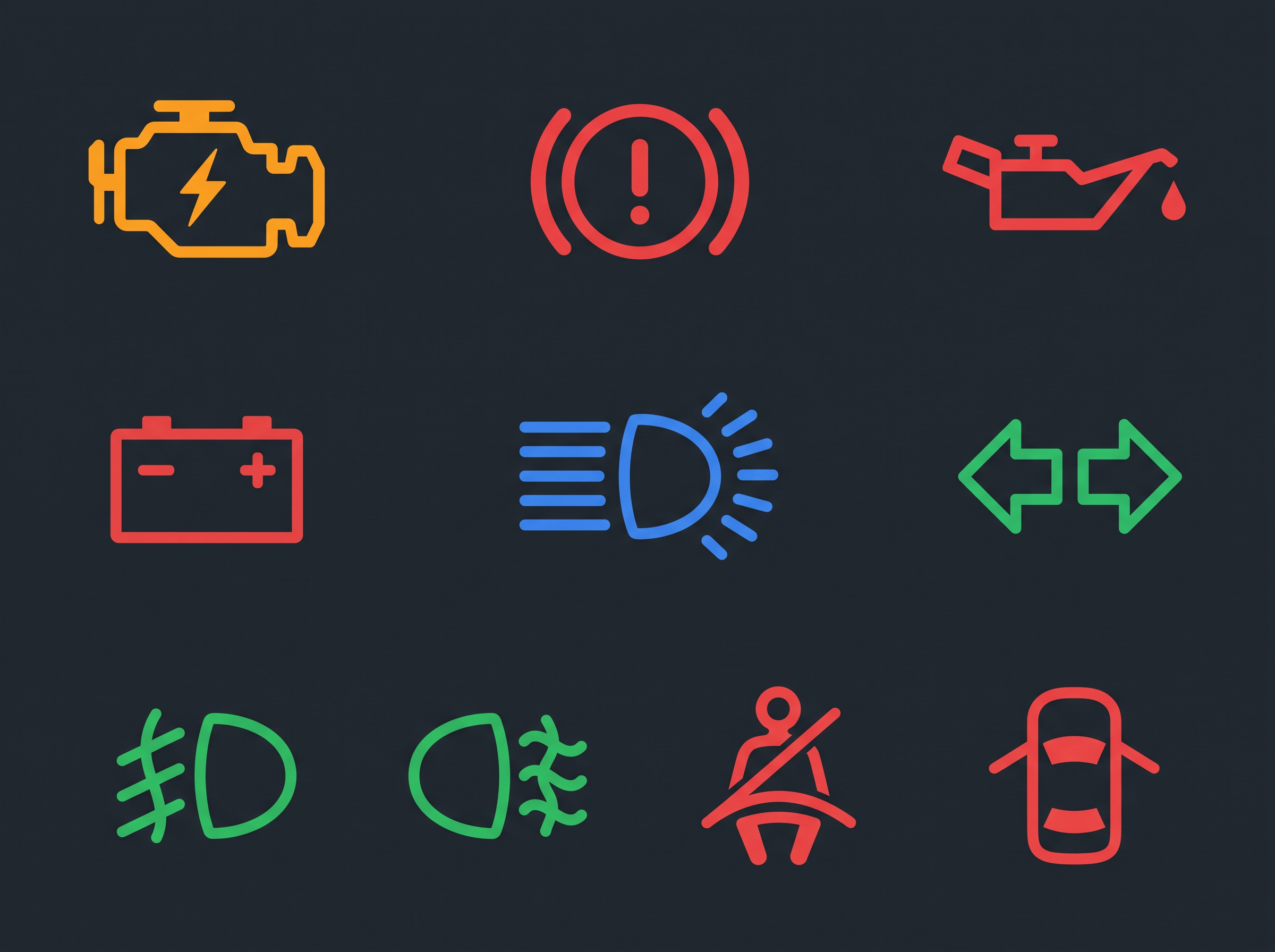
Reference chart. Symbols, colors and wording differ between makes and models — your owner's manual is always the final word.
Hover a symbol, open the explanation
68 of 68 symbols shown
This guide covers what a symbol generally indicates. It is not a diagnosis of your specific vehicle, and it is not a substitute for your owner's manual. If a light is red, blinking, or the car feels different, stop somewhere safe and call us.
Light still on?
We read the codes, test the system behind the symbol, and tell you what actually needs doing — before any work begins.